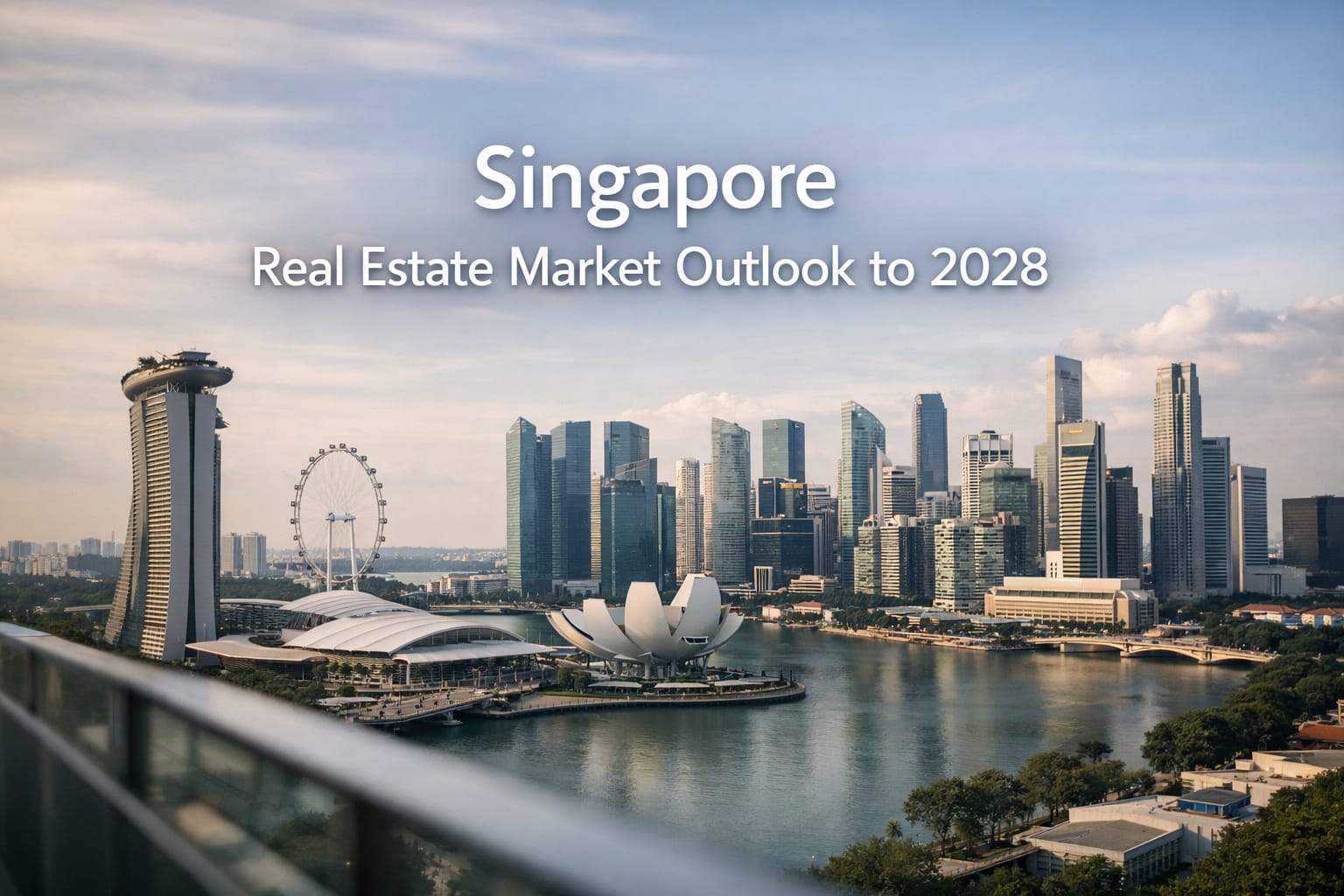
Ken Research Finds Singapore Real Estate Market Reached USD 46 Billion in 2023
The Singapore Real Estate Market demonstrated robust performance, recording a valuation of USD 46 billion in 2023, propelled by consistent demand across its residential, commercial, and industrial segments. This growth is underpinned by Singapore’s strategic positioning as a global financial hub, attracting significant investment and fostering economic stability. Factors such as stable economic policies and continued infrastructure development are expected to maintain this positive trajectory. For a deep dive into the sector’s dynamics and future projections, Ken Research offers a comprehensive Singapore Real Estate Market Outlook that outlines key trends and forecasts.
Is Singapore’s Real Estate Market Set to Sustain Current 5.1% PBIT Growth?
The market’s future trajectory appears positive, supported by strong institutional interest and a resilient economic outlook, a trend Ken Research identifies as structural rather than cyclical. Companies in the sector have reported healthy financial performance, indicating sustained investor confidence and operational efficiency across various property types.
Sectoral Resilience: The market shows robust resilience, with companies like CapitaLand reporting a 5.1% year-on-year growth in Profit Before Interest and Tax (PBIT), primarily driven by expanded retail assets and diversified portfolios.
Urban Redevelopment: Ongoing urban redevelopment plans and smart city initiatives continue to create new opportunities for both residential and commercial property development, attracting local and international investors.
Digital Transformation: The integration of smart technologies and sustainable building practices is enhancing property value and operational efficiency, making Singapore a pioneer in green building solutions.
Singapore’s Strategic Global Hub Status Drives Strong Real Estate Demand
Singapore’s reputation as a stable global financial and business hub serves as a primary catalyst for its real estate sector, dynamics that Ken Research Findings confirm are accelerating across the region. The influx of multinational corporations and high-net-worth individuals continues to fuel demand across all segments, from luxury residential units to prime commercial office spaces.
Foreign Investment Magnet: Singapore’s political stability and pro-business policies attract significant foreign direct investment, leading to increased demand for commercial and industrial real estate. Key players like City Developments Limited and Frasers Property actively benefit from this steady capital inflow.
Leading Developers’ Contributions: Major developers such as UOL Group and Mapletree Investments are continually expanding their portfolios, responding to strong market demand and leveraging the country’s strategic advantages, as detailed in the Singapore Real Estate competitive landscape.
Infrastructure Development: Continuous investment in public infrastructure, including transport networks and urban amenities, enhances accessibility and desirability of various districts, further driving property values.
Looking for the complete picture? Download Sample Report from Ken Research and explore the full dataset.
Why Are Property Prices in Singapore Still Down by 40% Compared to 2010?
Despite overall market strength, certain segments continue to face challenges, particularly concerning pricing and affordability in the residential sector, a pattern that Ken Research Data shows is reshaping competitive positioning. While the long-term outlook remains positive, immediate hurdles include managing supply-demand dynamics and adapting to evolving consumer preferences.
Price Corrections: Some properties, even in prime locations, have seen significant price adjustments, with discounts around 40% compared to their 2010 launch prices, starting from SGD 1,648 per square foot, reflecting market recalibration.
Cooling Measures Impact: Government cooling measures, though effective in stabilizing the market, have periodically impacted sales volumes and property price appreciation, particularly for speculative purchases.
Affordability Concerns: High property prices in popular districts continue to pose affordability challenges for local buyers, necessitating innovative housing solutions and alternative financing options to sustain demand.
Ready to make data-driven decisions? Access the Full Singapore Real Estate Market Outlook to 2028 Report by Ken Research today.
Conclusion
The Singapore Real Estate Market is poised for continued expansion, buoyed by its status as a global economic powerhouse and strategic location. The Singapore Real Estate Market forecast indicates sustained growth, yet it faces challenges such as pricing pressures and the need for adaptable housing solutions. Strong government support for infrastructure development and sustainable practices will act as key enablers, ensuring long-term value appreciation. To capitalize on this trajectory, developers and investors must prioritize innovation, digital adoption, and a keen understanding of evolving market dynamics to maintain Singapore’s competitive edge.
Frequently Asked Questions
Q: What is the current market size of the Singapore Real Estate sector?
The Singapore Real Estate Market was valued at USD 46 billion in 2023, driven by robust activity across residential, commercial, and industrial segments. This valuation highlights the sector’s significant contribution to the national economy, as confirmed by recent Ken Research assessments of the Singapore Real Estate market size.
Q: Which segment is showing the fastest growth in Singapore’s Real Estate?
While specific fastest-growing segments can fluctuate, the residential and commercial sectors consistently show strong performance due to sustained demand and ongoing urban development projects. Companies like CapitaLand have reported a 5.1% year-on-year growth in Profit Before Interest and Tax (PBIT), indicating robust profitability across their diversified portfolios, insights reinforced by Ken Research.
Q: What are the key growth drivers for the Singapore Real Estate Market?
The primary growth drivers include Singapore’s strategic location, its status as a leading global financial hub, and consistent government support for infrastructure development. These factors attract significant foreign investment and drive demand across all property types, which Ken Research identifies as fundamental to the Singapore Real Estate growth drivers.
Q: Who are the major players in the Singapore Real Estate competitive landscape?
The Singapore Real Estate market is dominated by several key players, including CapitaLand, City Developments Limited, Frasers Property, UOL Group, and Mapletree Investments. These developers are instrumental in shaping the market through extensive residential, commercial, and industrial projects, according to observations from Ken Research.
Q: How can I access the full data and forecast for this market?
For detailed analysis, market segmentation, and comprehensive forecasts, you can access the complete report through Ken Research. The full Singapore Real Estate Market analysis provides in-depth insights into the sector’s future outlook and strategic opportunities.