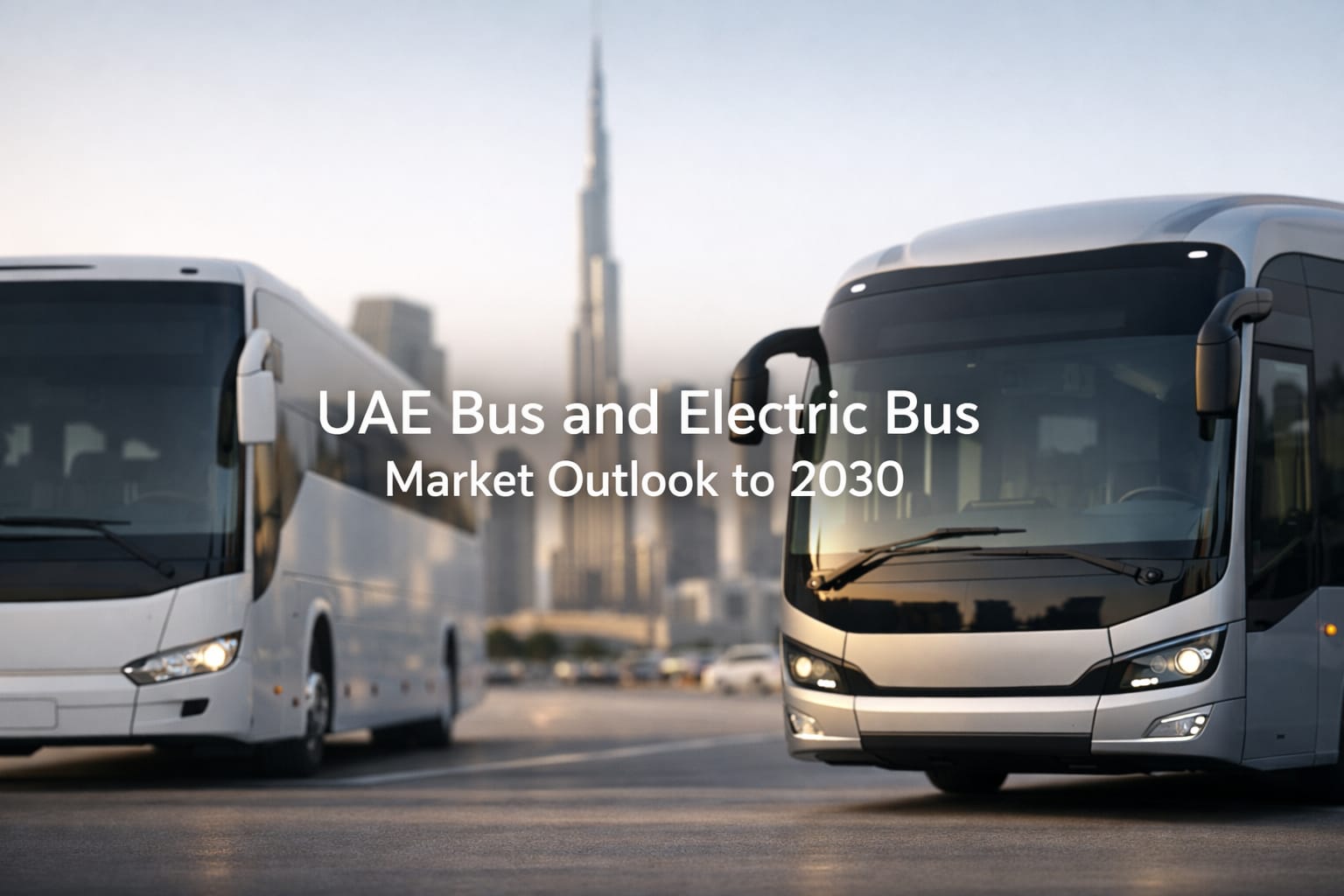
UAE Electric Bus Market Faces 30% Battery Performance Drop in Heat, Ken Research Analysis Shows
The UAE Bus and Electric Bus Market is navigating a complex landscape defined by ambitious sustainability goals and significant operational challenges. While the nation pushes for green transportation, electric bus battery performance can decrease by up to 30% in extreme heat conditions, posing a critical hurdle for widespread adoption. This dynamic creates a dual narrative of immense potential tempered by practical infrastructure and technological demands, as explored in the latest insights by Ken Research. Stakeholders are keen to understand the UAE Bus and Electric Bus Market outlook amidst these pressing environmental and operational factors.
Dubai’s Vision to Source 25% of Energy From Solar by 2030 Drives EV Adoption
Government initiatives are proving to be a formidable catalyst for growth in the UAE bus sector, particularly for electric vehicles, a shift that Ken Research identifies as structural rather than cyclical. The commitment to diversify energy sources and reduce carbon emissions directly supports electric bus deployment and infrastructure development, highlighting a strategic long-term vision. This aligns with national sustainability agendas, signaling significant investment opportunities.
Shams Dubai Initiative: The “Shams Dubai” initiative is a cornerstone of the nation’s green transition, aiming for 25% of Dubai’s energy needs to come from solar power by 2030. This ambitious target creates a favorable ecosystem for electric vehicles by ensuring a supply of clean, renewable energy for charging infrastructure, thereby reducing operational costs and carbon footprint.
Government Fleet Electrification: Several government entities are actively phasing out conventional buses in favor of electric models, setting a precedent for private operators. This push is backed by substantial budgets and policy frameworks, demonstrating a firm commitment to achieving transport sector decarbonization targets and fostering innovation.
Smart City Integration: The UAE’s broader smart city initiatives include advanced public transportation systems where electric buses play a central role. Integration with intelligent traffic management and real-time data analytics is enhancing efficiency, passenger experience, and overall attractiveness of public transit.
Navigating the Competitive Landscape: Intense Bidding and Service Differentiation
The UAE bus and electric bus market, while nascent in its electric segment, is characterized by intense competition among established public transport operators and emerging private players, dynamics that Ken Research Findings confirm are accelerating across the region. With no dominant pure-play electric bus manufacturers locally, the market sees a mix of international suppliers and local assemblers, focusing on service quality and technological integration to gain an edge. Competitive advantage often hinges on robust after-sales support and advanced fleet management solutions.
Public-Private Partnerships (PPPs): The government actively encourages PPPs to drive innovation and expand public transport networks. Companies vie for contracts, often emphasizing their sustainable solutions and operational efficiency, leading to a landscape where collaboration and strategic alliances are becoming crucial for market penetration.
Focus on Turnkey Solutions: Competitors are increasingly offering complete turnkey solutions, encompassing not just the buses but also charging infrastructure, maintenance, and operational software. This integrated approach minimizes initial capital outlay for clients and ensures seamless integration of new electric fleets into existing systems.
After-Sales Service and Support: Given the relatively new technology of electric buses in the region, comprehensive after-sales service, including spare parts availability, technical training, and rapid response maintenance, is a significant differentiator. Providers offering robust support frameworks are more likely to secure long-term contracts.
Looking for the complete picture? Download Sample Report from Ken Research and explore the full dataset.
Extreme Heat Conditions Cause Up To 30% Battery Performance Decrease for Buses
Despite significant advancements, the unique environmental conditions of the UAE present formidable operational and technological hurdles for electric bus deployment, a pattern that Ken Research Data shows is reshaping competitive positioning. The intense summer heat significantly impacts battery life and efficiency, while the nascent charging infrastructure requires substantial investment and strategic planning. Overcoming these challenges is crucial for the sustained growth of the electric bus segment in the region.
Battery Degradation in High Temperatures: In 2023, reports indicated that battery performance could decrease by up to 30% in extreme heat conditions. This degradation affects range, charging cycles, and overall lifespan, requiring specialized thermal management systems and robust battery technologies tailored for the harsh desert climate.
Charging Infrastructure Gaps: The current charging infrastructure for electric buses is still in its early stages of development, particularly outside major urban centers. Building a comprehensive network of fast-charging stations capable of supporting large fleets requires significant capital investment and careful spatial planning.
High Initial Procurement Costs: Electric buses typically have a higher upfront purchase price compared to conventional diesel buses. While operational savings from fuel and maintenance can offset this over time, the initial investment represents a significant barrier for many operators, especially smaller private companies.
Dust and Sand Challenges: The arid environment and frequent sandstorms pose mechanical challenges to electric bus components, especially sensitive electrical systems and cooling mechanisms. Protecting these systems from dust ingress and abrasive particles adds another layer of complexity to maintenance and design.
Ready to make data-driven decisions? Access the Full UAE Bus and Electric Bus Market Outlook to 2030 Report by Ken Research today.
Conclusion
The UAE Bus and Electric Bus Market is on a clear growth trajectory, driven by government mandates for sustainability and smart city integration, as detailed in the UAE Bus and Electric Bus Market analysis by Ken Research. However, the sector faces significant challenges, notably the impact of extreme heat on battery performance and the need for extensive charging infrastructure development. Overcoming these hurdles will require continued investment in specialized technology, innovative public-private partnerships, and a strategic approach to scaling infrastructure. Operators and policymakers must prioritize advanced thermal management solutions, develop robust charging networks, and incentivize the adoption of electric fleets to unlock the full potential of green public transportation in the UAE.
Frequently Asked Questions
Q: What is the current market size of the UAE Bus and Electric Bus Market?
While specific current market size figures for the UAE Bus and Electric Bus Market are dynamic, Ken Research’s ongoing assessments indicate significant year-on-year growth. This expansion is primarily fueled by increasing public and private sector investment in sustainable transportation solutions, aiming to reduce carbon footprints and enhance urban mobility across the Emirates.
Q: Which segment is driving the fastest growth within the UAE Bus and Electric Bus Market?
The electric bus segment is currently experiencing the fastest growth within the broader UAE Bus and Electric Bus Market. This accelerated adoption is largely due to aggressive government sustainability goals, such as Dubai’s commitment to solar energy by 2030, and the rising emphasis on reducing vehicular emissions in major cities. Ken Research highlights this as a key area for future investment.
Q: What are the key growth drivers for the UAE Bus and Electric Bus Market?
Key growth drivers include stringent government environmental regulations, ambitious smart city initiatives, and substantial investments in public transport infrastructure. Policies like the “Shams Dubai” initiative, targeting 25% solar energy by 2030, directly bolster electric vehicle adoption. These drivers underscore a strategic push towards sustainable urban mobility, as confirmed by Ken Research’s insights into the UAE Bus and Electric Bus sector growth.
Q: Who are the major players in the UAE Bus and Electric Bus Market’s competitive landscape?
The competitive landscape of the UAE Bus and Electric Bus Market is characterized by a mix of international electric bus manufacturers and local transport operators. While no specific company names were highlighted in the initial data, competition focuses on offering integrated solutions, including advanced vehicles, reliable charging infrastructure, and comprehensive after-sales support. Ken Research observes intense bidding for government contracts and a strong emphasis on service differentiation among market participants.
Q: How can I access the full data and forecast for the UAE Bus and Electric Bus Market?
For a complete understanding of the market dynamics, including detailed segmentation, competitive analysis, and future forecasts, you can access the full report. Ken Research provides comprehensive research on the UAE Bus and Electric Bus market trends, offering in-depth data for strategic decision-making and investment planning.