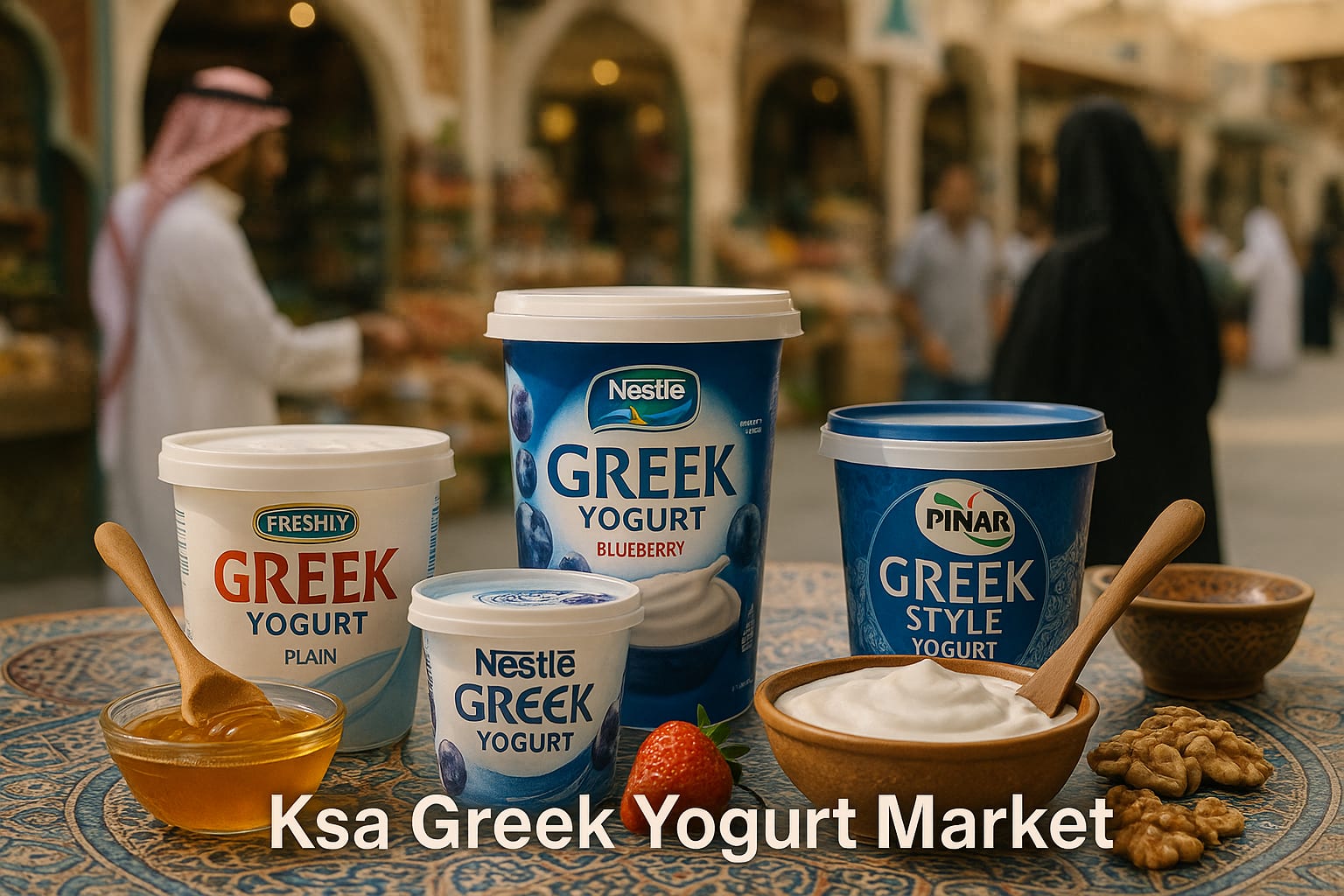
Ksa Greek Yogurt Market
The Saudi Arabia Greek Yogurt Market is valued at USD 1.2 billion, driven by rising health consciousness, growing preference for high-protein diets, and increasing popularity of Greek yogurt as a functional and versatile food ingredient. Riyadh, Jeddah, and Dammam dominate due to large urban populations, higher disposable incomes, and well-established modern retail and e-commerce infrastructure. The SFDA Technical Regulation (SFDA.FD 995/2021) aligned with Vision 2030 mandates nutritional quality and labeling standards for all domestic and imported Greek yogurt products.
Future Outlook of Saudi Arabia Greek Yogurt Market
Growing E-Commerce Platform Opportunity: Online grocery sales are projected to reach SAR 10 billion, enabling Greek yogurt brands to leverage digital platforms, deploy targeted marketing strategies, and introduce subscription models to enhance consumer loyalty and market reach.
Introduction of Organic and Natural Variants: The organic food market growing at 12% annually presents strong opportunity for brands launching organic Greek yogurt variants, catering to health-conscious Saudi consumers and building competitive brand differentiation in a premium product space.
Innovations in Low-Sugar and Fortified Products: Rising consumer demand for low-sugar and nutrient-fortified Greek yogurt options is creating compelling new product development pathways, attracting health-driven demographics and expanding the market’s appeal beyond core protein-focused consumers.
Plant-Based Greek-Style Yogurt Expansion: Growing consumer interest in plant-based dairy alternatives is broadening Greek yogurt’s addressable market, enabling manufacturers to attract vegan, flexitarian, and lactose-intolerant Saudi consumers through innovative non-dairy yogurt formulations.
Health and Wellness Sector Integration: Expanding adoption of Greek yogurt across fitness centers, clinics, and wellness programs, supported by an 8% annual growth in Saudi Arabia’s health and wellness market, is creating strong institutional demand for high-protein dairy products.
Ken Research provides comprehensive market intelligence across multiple industrial sectors, supporting data-backed business and strategic evaluations.
Growth Drivers of Saudi Arabia Greek Yogurt Market
Increasing Health Consciousness: With Saudi obesity rates at 33.7%, consumers are actively seeking nutritious alternatives, driving strong demand for Greek yogurt’s high protein and probiotic content as a preferred and health-supportive daily snacking option.
Rising Demand for Protein-Rich Foods: Per capita protein consumption rising to 90 grams daily is driving Greek yogurt adoption, with its approximately 10 grams of protein per serving directly aligning with consumer focus on muscle health and weight management.
Expansion of Retail Channels: A 15% increase in supermarkets and hypermarkets combined with online grocery sales projected at SAR 10 billion is significantly improving Greek yogurt accessibility and variety for Saudi consumers nationwide.
Flavored Greek Yogurt Dominance: Flavored Greek yogurt leads market share, driven by strong appeal among younger demographics and culinary versatility, complemented by growing demand for low-fat and probiotic-enriched variants among health-focused consumers.
Retail Consumer Segment Leadership: Retail consumers dominate end-user demand, driven by growing appetite for convenient and healthy snacking, supported by rising integration of Greek yogurt into foodservice menus at restaurants and cafes across Saudi Arabia’s major cities.
Challenges in Saudi Arabia Greek Yogurt Market
High Competition from Local and International Brands: With over 30 brands actively competing, market saturation is driving price wars and aggressive promotions, making it challenging for both new entrants and established brands to maintain profitability and market share.
Price Sensitivity Among Consumers: With average Greek yogurt priced at SAR 15 per 500g and disposable income growth projected at only 3%, price-sensitive consumers frequently opt for cheaper dairy alternatives, limiting premium brand penetration and sales volume growth.
Import Dependency for Specialty Ingredients: Reliance on imported dairy cultures and specialty ingredients for probiotic and organic variants exposes manufacturers to supply chain disruptions, foreign exchange volatility, and input cost pressures affecting product pricing and margin sustainability.
Regulatory Compliance Requirements: Mandatory adherence to SFDA nutritional quality and labeling standards for all domestic and imported products adds compliance costs and administrative complexity, particularly for smaller producers seeking market entry and product diversification.
Cold Chain Infrastructure Limitations: Maintaining effective cold chain logistics across Saudi Arabia’s vast geography for temperature-sensitive Greek yogurt products creates ongoing distribution cost and quality assurance challenges, particularly for reaching secondary cities and rural markets.
Conclusion
The Saudi Arabia Greek Yogurt Market, valued at USD 1.2 billion, is poised for strong growth driven by rising health consciousness, protein diet trends, and expanding retail infrastructure. While intense brand competition and consumer price sensitivity remain key challenges, opportunities in e-commerce, organic innovation, and plant-based alternatives offer compelling pathways for sustained long-term market development.
Interested in a deeper dive? Download the full report for a detailed market analysis and segmentation.