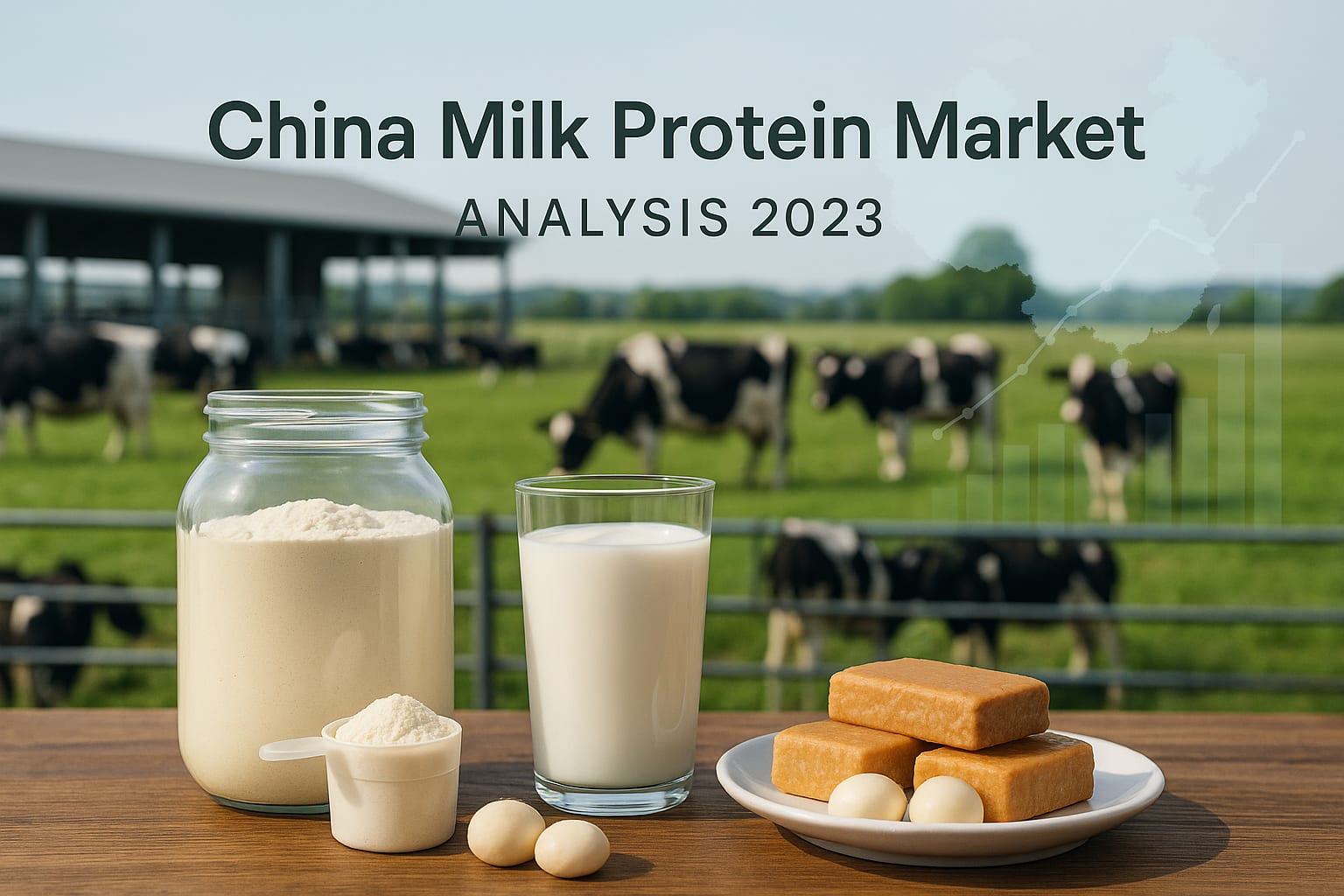
China Milk Protein Market
The China Milk Protein Market is valued at USD 25 billion, driven by rising demand for high-protein diets, growing health consciousness, expanding infant formula applications, and strong government support for domestic dairy production and food safety. Beijing, Shanghai, and Guangzhou dominate as key consumption and innovation hubs, while Eastern China leads production supported by advanced dairy processing infrastructure. The Chinese government’s 2023 food safety regulations enforcing stricter quality control for milk protein products are boosting consumer confidence and modernizing the broader dairy sector.
Trends in China Milk Protein Market
The China Milk Protein Market is being shaped by health-driven consumption, dairy processing innovation, and growing demand for functional and specialized nutrition products across diverse applications.
Dominance of Dry Milk Protein Forms: Dry forms of milk protein concentrates and isolates dominate the market due to their long shelf life, ease of transport, and suitability for large-scale food processing across infant formula, sports nutrition, and clinical nutrition sectors.
Growing Demand for Whey Protein: Whey protein concentrates and isolates are gaining strong traction in beverages and supplements, valued for rapid absorption and muscle recovery benefits, driven by China’s fast-growing sports nutrition and active lifestyle consumer segments.
Expansion of the Infant Formula Sector: Rapid growth of China’s infant formula industry is driving significant demand for high-quality milk protein concentrates and casein, with rising disposable incomes enabling parents to invest in premium nutritional solutions for infants.
Rise of Functional and Nutritional Supplements: With China’s nutritional supplements market expected to exceed CNY 400 billion and an aging population projected at 350 million, milk protein is increasingly adopted as a staple ingredient in preventive healthcare and functional nutrition products.
Dairy Processing Industry Expansion: The dairy processing sector is projected to reach an output value of CNY 1.2 trillion, fueled by technology advancements and facility investments that are broadening milk protein product variety and quality across Chinese markets.
Ken Research provides comprehensive market intelligence across multiple industrial sectors, supporting data-backed business and strategic evaluations.
Challenges in China Milk Protein Market
Fluctuating Raw Material Prices: Raw milk prices averaging CNY 5.0 per liter with fluctuations of up to 20% annually are creating significant production cost instability, pressuring manufacturer margins and complicating competitive pricing strategies across China’s milk protein sector.
Stringent Regulatory Compliance Costs: Rising food safety compliance costs expected to increase by 25% are placing financial burdens on dairy producers, creating barriers for smaller market entrants and increasing operational complexity for established milk protein manufacturers.
Import Dependency for Premium Ingredients: China’s reliance on imported whey proteins and specialty dairy ingredients from New Zealand, Europe, and Australia creates supply chain vulnerability and exposes manufacturers to foreign exchange fluctuations and geopolitical trade disruption risks.
Consumer Trust Challenges Post Food Safety Scandals: Historical dairy safety incidents in China continue to create lingering consumer skepticism toward domestically produced milk protein products, requiring sustained investment in quality certification, traceability, and transparent communication to rebuild confidence.
Intense Market Competition: A highly competitive landscape with both domestic giants and global ingredient leaders competing intensely across price, quality, and innovation dimensions creates significant pressure on margins and demands continuous product differentiation for milk protein manufacturers.
For deeper insights into related markets, explore the Vietnam Milk Protein Market, which provides comprehensive analysis of regional dynamics, competitive strategies, and growth opportunities across similar sectors.
Opportunities in China Milk Protein Market
Growth in E-Commerce Channels: China’s e-commerce sector projected at CNY 20 trillion, with 90% of consumers preferring online shopping, presents milk protein brands a significant opportunity to expand product reach, visibility, and direct-to-consumer sales efficiently.
Innovations in Functional Food Development: The functional food market expected to surpass CNY 600 billion offers strong opportunity for manufacturers to develop milk protein products targeting weight management, muscle recovery, and healthy aging among China’s growing health-conscious demographics.
Rising Health and Wellness Market: China’s health and wellness food sector projected at CNY 1.8 trillion with 70% of consumers seeking high-protein options presents a compelling addressable market for premium milk protein ingredient and finished product providers.
Government Support for Domestic Dairy Modernization: Ongoing government investment in dairy processing infrastructure, food safety compliance, and local raw milk production is creating a more competitive domestic supply environment and expanding opportunities for milk protein manufacturers.
Aging Population and Clinical Nutrition Demand: China’s rapidly expanding elderly population is driving growing demand for clinical nutrition and protein supplementation products, offering sustained long-term market opportunity for milk protein suppliers targeting geriatric health and preventive care segments.
Conclusion
The China Milk Protein Market, valued at USD 25 billion, is set for strong growth driven by rising health consciousness, functional food demand, and dairy processing expansion. While raw material price volatility and regulatory compliance costs remain key challenges, opportunities in e-commerce, clinical nutrition, and functional product innovation offer compelling pathways for sustained long-term market development.
Interested in a deeper dive? Download the full report for a detailed market analysis and segmentation.