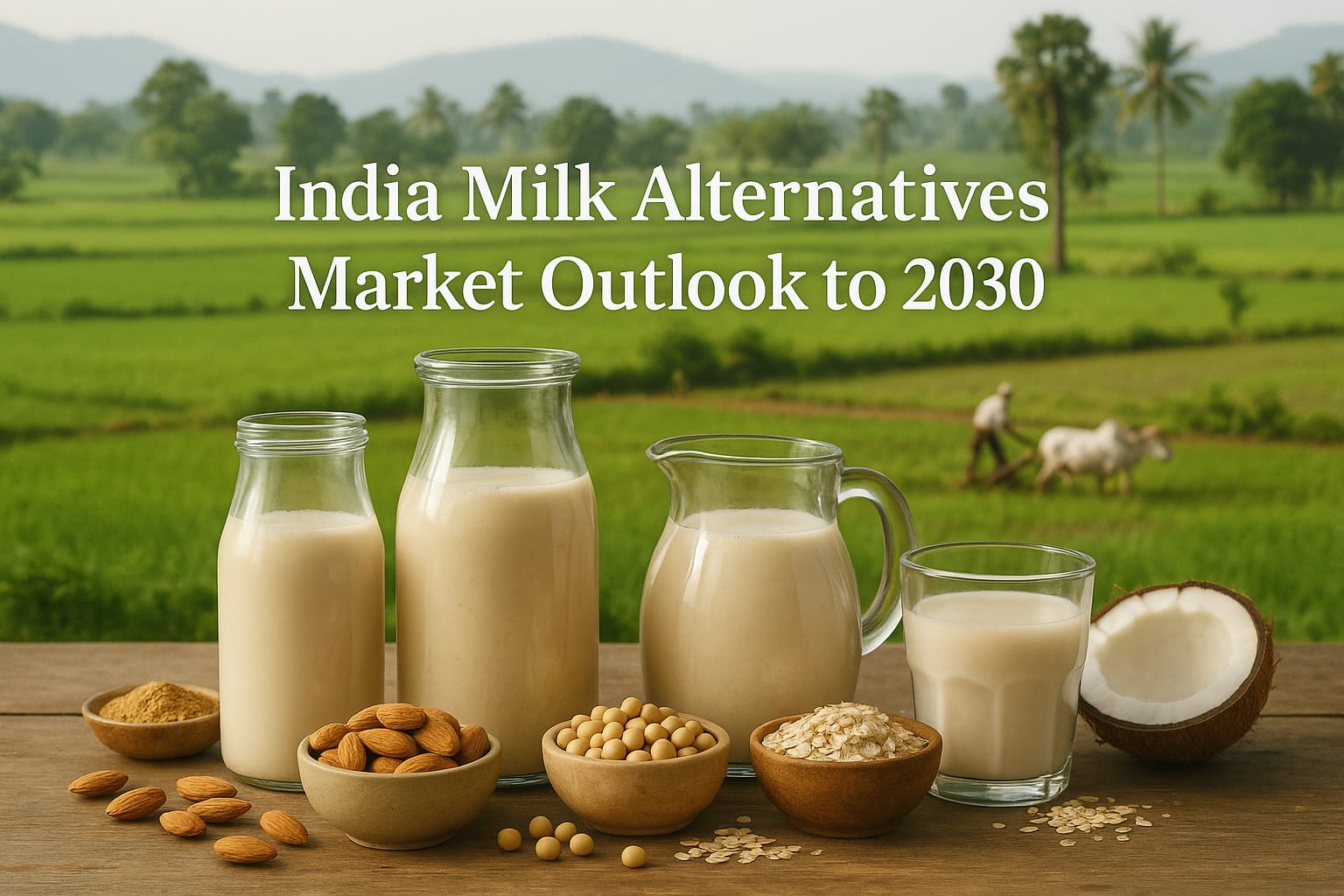
India Milk Alternatives Market
The India Milk Alternatives Market is valued at USD 855 million, driven by rising lactose intolerance awareness, growing vegan diet adoption, and increasing consumer shift toward healthier, sustainable food choices. Delhi, Mumbai, and Bangalore dominate due to high urban health-conscious populations, greater disposable incomes, and superior retail and distribution infrastructure. The FSSAI 2024 regulations on milk analogues are ensuring accurate dairy terminology usage and strengthening consumer trust in plant-based milk alternatives across the country.
Future Outlook of India Milk Alternatives Market
Robust Market Growth Expected: Rising health awareness, demand for lactose-free and vegan-friendly products, and technological advancements in product innovation are expected to drive significant market expansion across both urban and rural Indian markets.
Government Support for Sustainable Food Choices: Government initiatives promoting sustainable and plant-based food consumption are expected to complement growing retail distribution network expansion, further accelerating milk alternatives market growth across India in coming years.
Expanding Distribution in Tier 2 and Tier 3 Cities: Cities like Indore, Surat, Jaipur, and Bhopal offer significant untapped growth potential, with rising health consciousness and growing demand for plant-based products creating compelling new market frontiers.
Cross-Promotion Collaborations with Established Brands: Established food brands entering the plant-based segment, such as ITC’s Wonderz Milk, demonstrate strong cross-promotion potential, leveraging existing brand equity to expand milk alternatives reach and consumer acceptance significantly.
Innovation in Product Formats and Flavors: Continued innovation in flavored plant-based milk variants and convenient formats is expected to broaden consumer appeal beyond health-focused segments, attracting younger demographics and mainstream shoppers seeking dairy alternative options.
Ken Research provides comprehensive market intelligence across multiple industrial sectors, supporting data-backed business and strategic evaluations.
Growth Drivers of India Milk Alternatives Market
Rising Health Consciousness Among Consumers: Over 74% of Indian respondents have consumed plant-based milk alternatives such as soy, rice, almond, or oat milk, reflecting a significant and sustained shift toward healthier dietary choices among Indian consumers.
Growth of Vegan and Plant-Based Diet Movements: With 60–65% of Indians lactose intolerant and 63% of consumers preferring plant-based alternatives, Millennials and Gen Z are rapidly driving adoption of almond, coconut, and soy milk alternatives nationwide.
Increasing Availability Through Modern Retail Channels: Expansion of supermarkets and hypermarkets is significantly enhancing plant-based milk accessibility, enabling wider consumer reach and making specialized dairy alternatives available to a much larger and diverse Indian audience.
Soy Milk Dominance as a Versatile Alternative: Soy-based milk holds the highest market share, widely used in cooking, coffee, and smoothies due to its established familiarity, strong nutritional profile, and broad consumer acceptance across urban Indian markets.
Growing Preference for Flavored Milk Alternatives: Flavored variants including chocolate and vanilla-based almond and soy milk are dominating the market, driven by consumer novelty-seeking behavior and appeal to younger demographics replacing traditional dairy beverages.
For deeper insights into related markets, explore the Vietnam Milk Alternatives Market, which provides comprehensive analysis of regional dynamics, competitive strategies, and growth opportunities across similar sectors.
Challenges in India Milk Alternatives Market
High Price Compared to Traditional Dairy: Plant-based milk alternatives remain significantly more expensive than conventional dairy products, creating a strong affordability barrier that limits adoption among price-sensitive consumers in lower-income urban and rural Indian segments.
Limited Shelf Life of Some Alternatives: Certain plant-based milks have a shelf life of only 9–12 months, posing distribution and storage challenges in regions lacking adequate cold chain infrastructure, affecting product availability and consumer access.
Low Awareness in Rural and Semi-Urban Markets: Despite growing urban adoption, rural and semi-urban consumers remain largely unfamiliar with plant-based milk alternatives, limiting the addressable market and requiring significant education and outreach investment from manufacturers.
Regulatory Complexity around Dairy Terminology: Navigating FSSAI regulations on milk analogue labelling and dairy terminology restrictions adds compliance complexity and marketing constraints for plant-based milk brands seeking clear consumer communication in a tightly regulated food environment.
Taste and Texture Perception Barriers: Many consumers remain resistant to plant-based milk alternatives due to differences in taste, texture, and cooking performance compared to traditional dairy, requiring continued product innovation to bridge consumer acceptance gaps.
Conclusion
The India Milk Alternatives Market, valued at USD 855 million, is set for robust growth backed by rising lactose intolerance awareness, vegan diet adoption, and expanding retail distribution. While high pricing and rural awareness gaps remain key challenges, opportunities in Tier 2 and 3 cities, brand collaborations, and product innovation offer compelling pathways for sustained long-term market expansion.
Interested in a deeper dive? Download the full report for a detailed market analysis and segmentation.