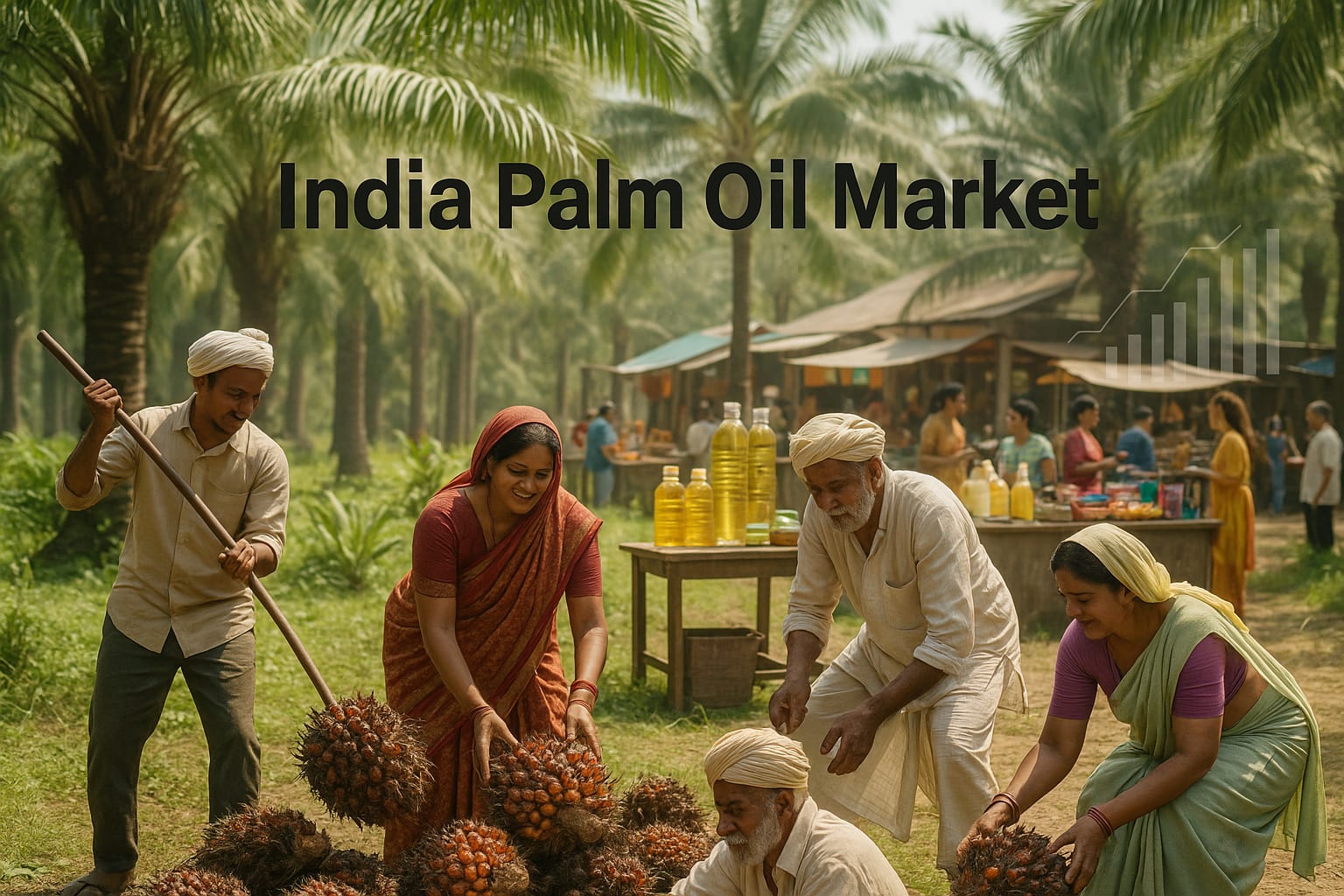
India Palm Oil Market
The India Palm Oil Market is valued at approximately USD 10.5 billion, driven by rising consumer demand for palm oil across food products, personal care items, and industrial applications, supported by population growth and rapid urbanization. North India, Maharashtra, Tamil Nadu, and Uttar Pradesh dominate consumption, serving as key distribution hubs supported by large food processing industries and a growing middle-class consumer base. The National Mission on Edible Oils – Oil Palm (NMEO-OP) targets expansion of oil palm cultivation to 1 million hectares with an investment of INR 11,000 crore to reduce import dependency.
Growth Drivers of India Palm Oil Market
Increasing Demand for Edible Oils: India’s edible oil demand projected to reach 23 million metric tons, with per capita consumption rising to 18 kg annually and a growing middle class expected at 600 million, is driving strong demand for cost-effective palm oil solutions.
Government Initiatives for Palm Oil Production: The NMEO-OP initiative backed by USD 1.5 billion in investment aims to reduce import dependency, which currently accounts for over 60% of India’s edible oil market, through targeted domestic palm cultivation expansion and farmer support programs.
Expansion of Food Processing Industry: India’s food processing sector projected to reach USD 470 billion growing at 10% annually, with over 40,000 processing units in operation, is driving sustained and growing demand for palm oil as a versatile key food ingredient.
Food Industry as Leading End-User: The food industry leads palm oil consumption in India, driven by widespread use in cooking, frying, and food processing applications where palm oil’s neutral flavor and high smoke point make it a preferred and cost-effective ingredient.
Personal Care and Industrial Application Growth: Rising demand for palm oil in cosmetics, toiletries, and biodiesel production is diversifying its end-user base, reducing dependence on food sector demand alone and creating multiple revenue streams for Indian palm oil producers and refiners.
Ken Research provides comprehensive market intelligence across multiple industrial sectors, supporting data-backed business and strategic evaluations.
Competitive Landscape of India Palm Oil Market
The India Palm Oil Market features a dynamic mix of leading domestic edible oil refiners and global agribusiness giants competing through production scale, supply chain integration, and distribution network strength.
Adani Wilmar Ltd.: Founded in 1999 in Ahmedabad, India, Adani Wilmar is one of India’s largest edible oil companies, offering the Fortune palm oil brand through an extensive nationwide distribution network serving retail, institutional, and food processing customers.
Cargill India Pvt. Ltd.: Established in 1987 in Gurgaon, India, Cargill India is a leading multinational agribusiness company with significant palm oil refining and trading operations serving India’s food manufacturing, HoReCa, and institutional edible oil procurement segments.
Ruchi Soya Industries Ltd.: Founded in 1986 in Indore, India, Ruchi Soya is a major Indian edible oil manufacturer offering refined palm oil products under its Nutrela and Ruchi Gold brand portfolio distributed through national retail and modern trade channels.
Godrej Agrovet Ltd.: Established in 1991 in Mumbai, India, Godrej Agrovet is a diversified agribusiness company with significant oil palm plantation operations in India, playing a key role in domestic crude palm oil production and supply chain development.
Bunge India Pvt. Ltd.: Founded in 2002 in Kolkata, India, Bunge India is a global agribusiness and food company with significant edible oil trading, refining, and distribution operations supplying palm oil to India’s food processing and retail sectors.
For deeper insights into related markets, explore the Global Palm Oil Market, which provides comprehensive analysis of regional dynamics, competitive strategies, and growth opportunities across similar sectors.
Opportunities in India Palm Oil Market
Technological Advancements in Palm Oil Production: Innovations in precision farming and biotechnology present compelling opportunity to enhance palm oil yields, reduce production costs, and improve efficiency, enabling Indian producers to strengthen their domestic and global competitive positioning significantly.
Growing Organic Palm Oil Market: The organic palm oil market expected to reach USD 1 billion presents a lucrative opportunity for producers investing in organic certification and sustainable practices to attract health-conscious consumers and differentiate within India’s expanding premium edible oil category.
Domestic Production Expansion Under NMEO-OP: Government-backed NMEO-OP financial support for farmers and processing facility investments creates strong opportunity for palm oil producers to scale domestic cultivation, reduce import costs, and capture growing market share in India’s large edible oil sector.
Biodiesel and Industrial Application Expansion: India’s growing biodiesel sector and industrial palm oil applications present diversified revenue opportunity for producers, reducing dependence on food sector demand and creating stable long-term B2B supply relationships with industrial and energy sector buyers.
Sustainable Sourcing Certification Opportunity: Rising global and domestic consumer demand for sustainably certified palm oil presents significant market differentiation opportunity for Indian producers adopting RSPO certification and traceable, deforestation-free supply chain practices for premium market positioning.
Additional market intelligence can be found in the Indonesia Palm Oil Market, offering valuable perspectives on industry trends, regulatory frameworks, and strategic developments shaping the broader market landscape.
Conclusion
The India Palm Oil Market, valued at approximately USD 10.5 billion, is poised for strong growth driven by food processing expansion, government production incentives, and rising edible oil demand. While global price volatility and environmental sustainability concerns remain key challenges, opportunities in organic certification, precision farming, and domestic production scale-up offer compelling pathways for long-term market development.
Interested in a deeper dive? Download the full report for a detailed market analysis and segmentation.