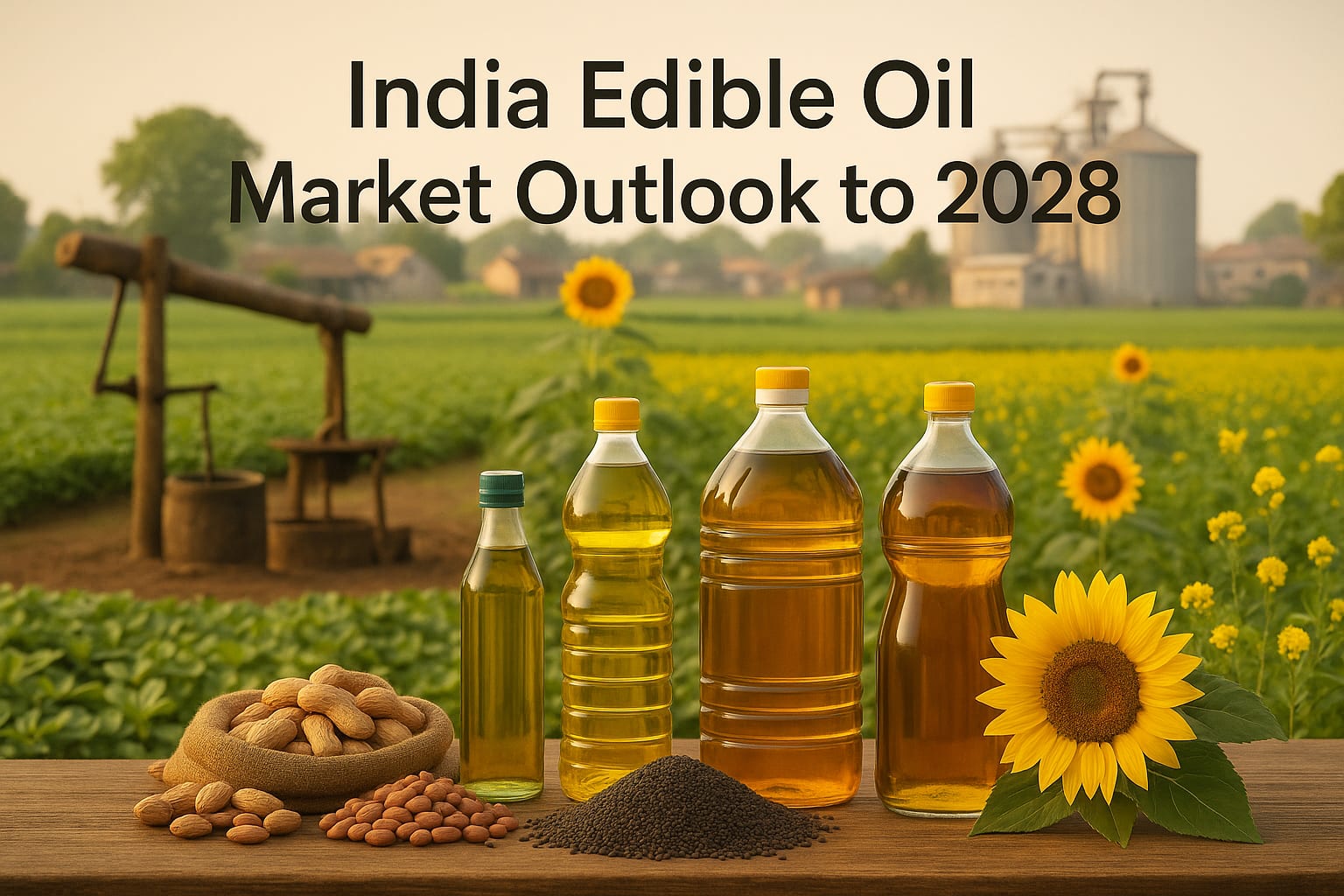
India Edible Oil Market
The India Edible Oil Market reached a volume of 10,00,000 metric tons, driven by rising consumer health consciousness, increasing demand for organic and low-cholesterol oil variants, and rapid urbanization reshaping dietary patterns across India’s growing middle-class population. West and Central India dominate oilseed production, with nine states including Madhya Pradesh, Rajasthan, and Maharashtra contributing over 90% of national oilseed output. Major crops including soybean, rapeseed-mustard, and groundnut collectively account for more than 92% of India’s total oilseed production volume.
Trends in India Edible Oil Market
India’s Edible Oil Market is being reshaped by urbanization, premiumization, health-conscious consumer behavior, and the rapid expansion of modern retail and e-commerce oil distribution channels.
Consumer Pack as Leading Packaging Type: Consumer packs dominate the market, driven by growing household preference for hygienic, branded, and portion-controlled pre-packaged oils across modern retail, supermarkets, and e-commerce platforms, supported by rising disposable incomes and retail infrastructure expansion.
1000ml Pack as Leading Packaging Size: 1000ml packs dominate packaging size demand due to their affordability and suitability for daily household use, benefiting from bulk purchasing trends across middle-income retail consumers who represent the largest edible oil consumption demographic.
Shift Toward Healthier Oil Variants: Growing consumer awareness of lifestyle diseases including obesity and heart disease is accelerating demand for healthier edible oil variants including sunflower, olive, and omega-rich oils perceived as offering superior nutritional profiles.
Urbanization Driving Processed Food Oil Demand: Rapid urbanization is significantly altering Indian dietary patterns, with urban consumers increasing consumption of ready-to-eat meals, snacks, and frozen foods requiring edible oils, driving consistent demand growth across major metropolitan and tier-2 cities.
E-Commerce Expanding Specialty Oil Access: E-commerce platforms are providing consumers in tier-2 and tier-3 cities access to niche products including organic and cold-pressed oils previously unavailable in local retail stores, significantly broadening the addressable consumer market for premium oil variants.
Ken Research provides comprehensive market intelligence across multiple industrial sectors, supporting data-backed business and strategic evaluations.
Competitive Landscape of India Edible Oil Market
India’s Edible Oil Market features a dynamic mix of domestic FMCG giants and multinational agribusiness players competing through brand equity, distribution scale, and product portfolio diversification.
Patanjali Foods Limited: Founded in 1986 in Haridwar, Uttarakhand, Patanjali Foods is a leading Indian FMCG company leveraging its strong brand trust and nationwide distribution network to offer a broad range of edible oil and natural food products.
Adani Wilmar: Established in 1999 in Ahmedabad, Gujarat, Adani Wilmar is one of India’s largest edible oil producers, offering the Fortune brand portfolio of refined oils distributed through an extensive national retail and modern trade supply chain network.
Emami Agrotech: Founded in 2002 in Kolkata, West Bengal, Emami Agrotech is a leading edible oil and specialty fats producer offering branded mustard, sunflower, and soybean oil products to household and HoReCa consumers across India.
Bunge India: Established in 1987 in Mumbai, Maharashtra, Bunge India is a multinational agribusiness company with significant edible oil refining and processing operations in India, strengthened through strategic investments and supply chain partnerships.
Mother Dairy: Founded in 1974 in New Delhi, Mother Dairy is a trusted Indian consumer food brand offering edible oils alongside its flagship dairy and fruit-vegetable product lines through a strong retail and cooperative distribution network across India.
For deeper insights into related markets, explore the Asia Pacific Edible Oil Market, which provides comprehensive analysis of regional dynamics, competitive strategies, and growth opportunities across similar sectors.
Opportunities in India Edible Oil Market
Health-Conscious Oil Innovation: Rising lifestyle disease prevalence is creating strong demand for oils high in omega-3 and omega-6 fatty acids including flaxseed and avocado oil, presenting compelling product development and premiumization opportunity for health-positioned edible oil manufacturers.
Increased E-Commerce Accessibility: E-commerce channels are enabling edible oil brands to reach health-conscious consumers in previously underserved tier-2 and tier-3 cities, unlocking significant new consumer market potential for organic, cold-pressed, and specialty premium oil product categories.
Government Support for Domestic Oilseed Production: Government initiatives boosting domestic oilseed cultivation and reducing import dependency are creating a favorable investment environment for edible oil producers seeking to strengthen domestic raw material sourcing and supply chain resilience.
Organic and Cold-Pressed Oil Segment Growth: Rising consumer interest in organic and cold-pressed oils perceived as healthier and less processed presents significant premium product positioning opportunity for brands targeting India’s growing health-focused and urban affluent consumer segments through modern retail and digital channels.
HoReCa and Institutional Bulk Demand: Growing demand from hotels, restaurants, and catering services for large-format 5000ml pack edible oils presents consistent B2B revenue opportunity for oil producers offering reliable supply, quality certification, and competitive institutional pricing to India’s expanding food service sector.
Additional market intelligence can be found in the Italy Edible Oil Market, offering valuable perspectives on industry trends, regulatory frameworks, and strategic developments shaping the broader market landscape.
Conclusion
The India Edible Oil Market, reaching 10,00,000 metric tons, is poised for strong growth driven by urbanization, health-conscious consumption, and government oilseed production support. While geopolitical supply disruptions and shifting consumer preferences remain key challenges, opportunities in premium oil innovation, e-commerce expansion, and institutional demand offer compelling pathways for sustained long-term market development.
Interested in a deeper dive? Download the full report for a detailed market analysis and segmentation.