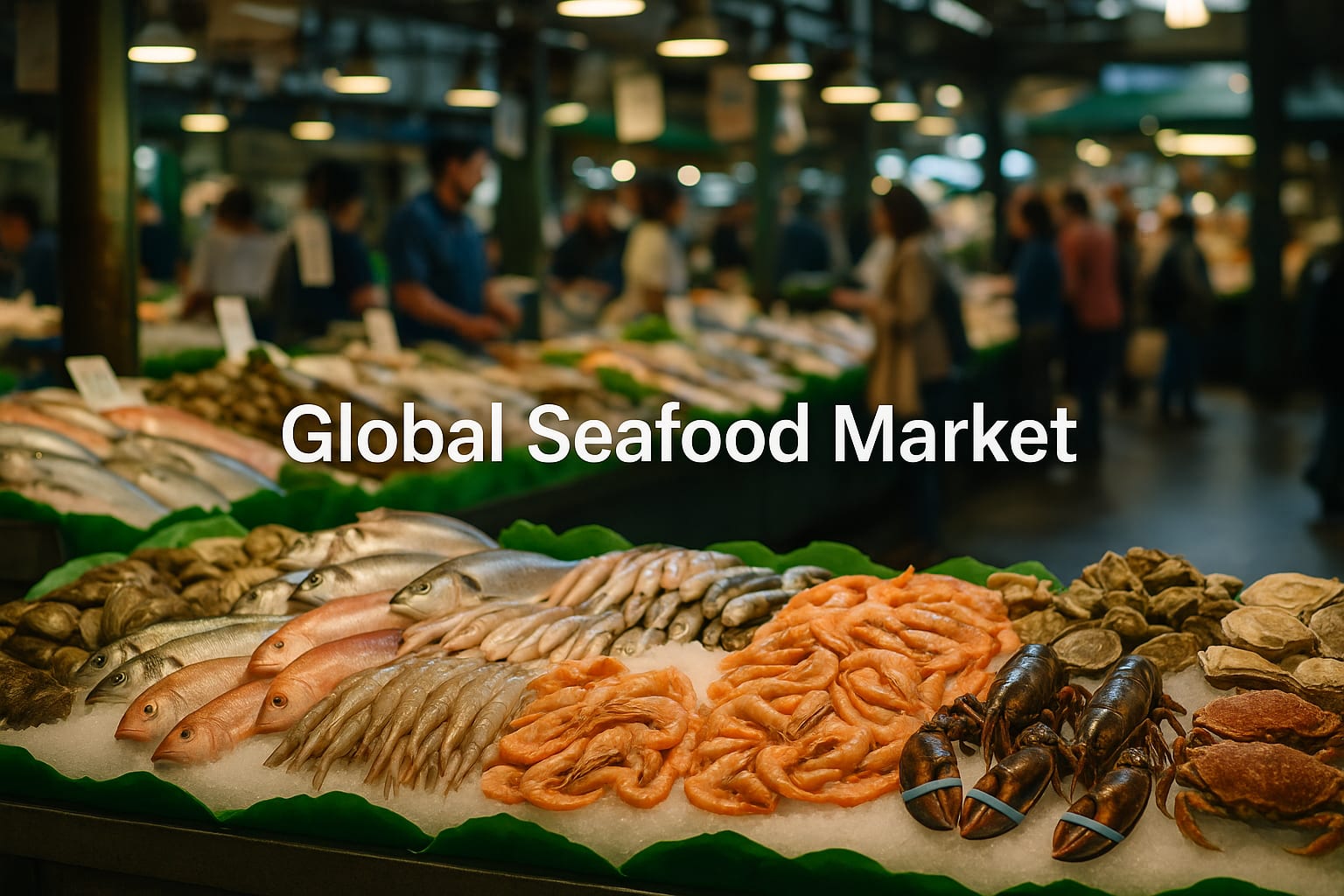
Global Seafood Market
The Global Seafood Market is valued at USD 370 billion, driven by rising demand for healthy protein sources, growing awareness of seafood’s nutritional benefits, aquaculture expansion, and increasing adoption of pescatarian and plant-based diets worldwide. China, the United States, and Norway dominate, with the Asia-Pacific region accounting for over 44% of global seafood consumption, supported by strong culinary traditions and advanced processing capabilities. The EU Common Fisheries Policy (CFP) 2023 enforces binding catch quotas, conservation measures, and traceability requirements for all seafood products traded within European markets.
Trends in Global Seafood Market
The Global Seafood Market is evolving through sustainability-driven purchasing, aquaculture innovation, convenience product adoption, and growing consumer interest in diverse global seafood culinary experiences.
Fish Dominating as Leading Product Type: Fish, particularly salmon and tuna, dominates global seafood consumption due to high nutritional value, versatility across global cuisines, and growing per capita fish consumption projected to reach 21 kg globally.
Processed Seafood Gaining Strong Traction: Frozen, canned, smoked, and ready-to-eat seafood products are gaining momentum, driven by consumer demand for convenience, improvements in cold chain logistics, and advanced packaging technologies enhancing product quality and extending shelf life.
Sustainable Seafood Demand Rising: With 51% of consumers willing to pay more for sustainably sourced seafood and the global sustainable seafood market expected to exceed $21 billion, sustainability certification is becoming a key consumer purchasing driver across retail and foodservice channels.
Retail Consumers as Leading End-User: Retail consumers represent the largest end-user segment, driven by rising health consciousness, home cooking trends, and expansion of supermarket and online retail channels offering wider and more accessible seafood product varieties globally.
Plant-Based and Pescatarian Diet Adoption: Growing adoption of pescatarian diets and rising popularity of plant-based seafood alternatives are reshaping market dynamics, appealing to health-conscious and environmentally aware consumers seeking sustainable protein alternatives to conventional meat products.
Ken Research provides comprehensive market intelligence across multiple industrial sectors, supporting data-backed business and strategic evaluations.
Competitive Landscape of Global Seafood Market
The Global Seafood Market features a dynamic mix of large multinational fishing and aquaculture companies driving scale, product innovation, and sustainable sourcing across global supply chains.
Mowi ASA: Founded in 1964 in Bergen, Norway, Mowi ASA is the world’s largest Atlantic salmon producer, recognized globally for its sustainable aquaculture practices, premium seafood processing, and extensive international retail and foodservice distribution network.
Thai Union Group PCL: Established in 1977 in Bangkok, Thailand, Thai Union is one of the world’s largest seafood companies, producing canned tuna, shrimp, and value-added seafood products distributed across global retail markets under multiple leading international brand names.
Nippon Suisan Kaisha, Ltd. (Nissui): Founded in 1883 in Tokyo, Japan, Nissui is a leading Japanese seafood company offering a comprehensive portfolio spanning fishing, aquaculture, processing, and distribution of diverse fish and shellfish products across domestic and international markets.
Dongwon Industries Co., Ltd.: Established in 1969 in Seoul, South Korea, Dongwon Industries is South Korea’s leading seafood company, known for its tuna fishing operations, canned seafood products, and expanding global distribution footprint across retail and foodservice channels.
Trident Seafoods Corporation: Founded in 1973 in Seattle, Washington, USA, Trident Seafoods is one of North America’s largest vertically integrated seafood companies, offering wild-caught Alaskan seafood products across retail, foodservice, and export market channels.
For deeper insights into related markets, explore the Usa Seafood Market, which provides comprehensive analysis of regional dynamics, competitive strategies, and growth opportunities across similar sectors.
Challenges in Global Seafood Market
Overfishing and Sustainability Issues: With 35% of global fish stocks overexploited according to the UN, stricter regulatory quotas and fishing limits are expected to disrupt supply chains and increase operational costs for seafood producers across key fishing regions globally.
Regulatory Compliance Costs: Compliance costs projected to rise by 16% due to tightening food safety, traceability, and sustainability regulations are straining smaller seafood operators, diverting critical resources from innovation and limiting their ability to compete effectively with larger multinational players.
Climate Change Impact on Fish Stocks: Rising ocean temperatures, acidification, and changing migration patterns driven by climate change are threatening the sustainability and geographic availability of commercially important fish species, creating long-term supply uncertainty for global seafood industry participants.
Cold Chain Infrastructure Gaps in Emerging Markets: Inadequate cold chain infrastructure across Sub-Saharan Africa and parts of Asia creates significant product spoilage risks and distribution inefficiencies, limiting market penetration of premium fresh and chilled seafood products in high-potential emerging consumer markets.
Foodborne Safety and Contamination Risks: Persistent risks of seafood contamination including heavy metals, microplastics, and pathogen exposure require continuous investment in testing, quality assurance, and traceability systems, adding operational complexity and cost for seafood producers and processors globally.
Additional market intelligence can be found in the Saudi Arabia Seafood Market, offering valuable perspectives on industry trends, regulatory frameworks, and strategic developments shaping the broader market landscape.
Conclusion
The Global Seafood Market, valued at USD 370 billion, is poised for strong growth driven by health-conscious consumption, aquaculture innovation, and sustainable sourcing demand. While overfishing risks and rising compliance costs remain key challenges, opportunities in processed seafood, emerging market expansion, and plant-based seafood innovation offer compelling pathways for sustained long-term market development.
Interested in a deeper dive? Download the full report for a detailed market analysis and segmentation.