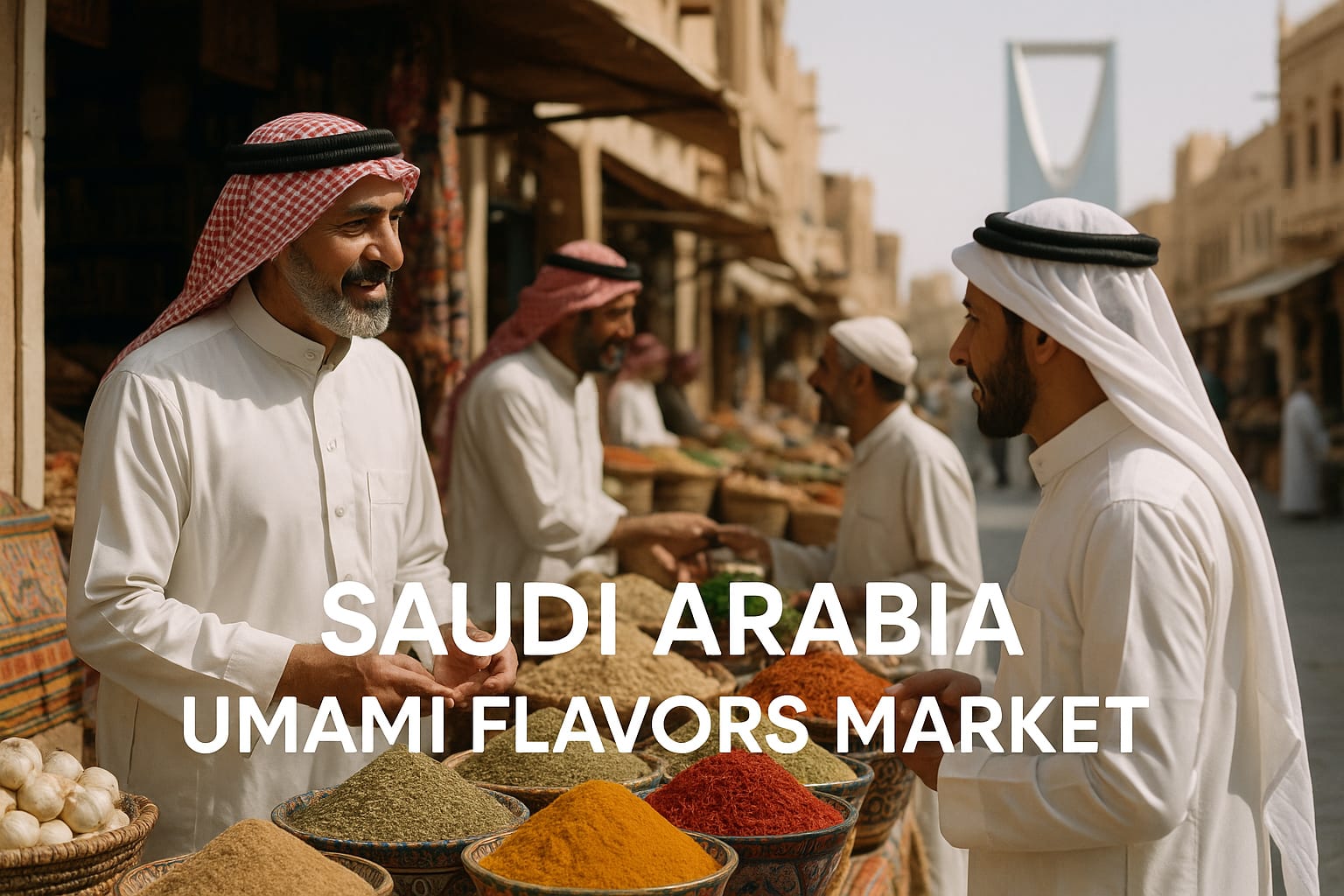
Saudi Arabia Umami Flavors Market
The Saudi Arabia Umami Flavors Market is valued at USD 180 million, driven by rising demand for flavor enhancers, growing clean-label and natural umami product trends, and the expanding popularity of Asian and fusion cuisines across Saudi foodservice channels. Riyadh, Jeddah, and Dammam dominate, serving as key hubs for food distribution, culinary innovation, and processed food manufacturing for domestic and re-export markets. The SFDA Technical Regulation for Food Additives and GSO 2500/2015 set strict use conditions, purity criteria, maximum levels, and labeling requirements for all flavor enhancers including glutamates sold in Saudi Arabia.
Future Outlook of Saudi Arabia Umami Flavors Market
Innovations in Flavor Technology: Companies investing in advanced flavor technology R&D can create unique umami profiles targeting diverse Saudi consumer tastes, increasing market share through novel culinary experiences aligned with evolving foodservice and processed food manufacturer demands.
Expansion into Emerging GCC Markets: Rising disposable incomes and changing dietary habits across GCC emerging markets are creating receptive growth environments for umami flavor products, enabling companies to diversify customer bases and strengthen regional revenue streams significantly.
Shift Toward Natural and Clean-Label Products: Growing consumer demand for natural umami sources including yeast extracts, mushroom, and seaweed-based flavor systems is driving product portfolio evolution away from MSG toward cleaner, health-positioned umami ingredient solutions for Saudi food manufacturers.
E-Commerce Expanding Market Accessibility: Growth of e-commerce platforms is facilitating wider accessibility to specialty umami ingredients and flavor products, enabling both B2B and B2C market reach expansion and encouraging new entrants to explore Saudi Arabia’s lucrative umami segment.
Foodservice Sector Driving Sustained Demand: Rapid expansion of quick-service restaurants, casual dining chains, and catering services under Vision 2030 is driving consistent institutional umami flavor demand as operators seek distinctive, scalable savory taste solutions for diverse contemporary Saudi menus.
Ken Research provides comprehensive market intelligence across multiple industrial sectors, supporting data-backed business and strategic evaluations.
Growth Drivers of Saudi Arabia Umami Flavors Market
Increasing Consumer Demand for Flavor Enhancers: The umami flavors market is projected to reach SAR 1.5 billion, with 70% of Saudi consumers expressing preference for more flavorful food, driven by international cuisine popularity and rising dining-out frequency across major urban centers.
Growth of the Food and Beverage Industry: Saudi Arabia’s F&B industry growing at 5.2% annually toward SAR 250 billion, fueled by rising disposable incomes and urbanization, is creating expanding manufacturer demand for umami flavor enhancers in processed and convenience food applications.
Rising Awareness of Health Benefits: Umami’s ability to reduce sodium needs by up to 25% is attracting health-conscious consumer and government interest, as Saudi Arabia’s healthy eating promotion agenda directly supports demand for umami-based low-sodium food product development.
Yeast Extracts and Natural Umami Gaining Share: Clean-label and “no added MSG” positioning is driving adoption of yeast extracts, HVP, and natural umami systems among Saudi food manufacturers seeking consumer-friendly, regulatory-compliant flavor enhancement alternatives.
Foodservice and HoReCa as Dominant End-User: Rapid QSR and casual dining expansion in Riyadh and Jeddah is making the Foodservice and HoReCa segment the leading umami flavor end-user, driving consistent demand for customized savory systems and seasoning blends.
For deeper insights into related markets, explore the Oman Umami Flavors Market, which provides comprehensive analysis of regional dynamics, competitive strategies, and growth opportunities across similar sectors.
Challenges in Saudi Arabia Umami Flavors Market
Regulatory Compliance Issues: Stringent SFDA regulations requiring rigorous safety assessments, registration, and Arabic/English labeling compliance create significant operational complexity and cost for umami flavor manufacturers and importers seeking consistent Saudi market access.
High Competition from Alternative Flavors: The alternative flavoring market projected to grow at 4.1% annually is intensifying competition for umami products, pressuring manufacturers to differentiate through innovation and value communication to prevent price erosion and market share loss.
Consumer Perception of MSG: Persistent consumer skepticism around monosodium glutamate’s safety, despite regulatory approval, creates marketing challenges for MSG-based umami products, requiring manufacturers to invest in consumer education or pivot toward natural umami alternative positioning strategies.
Fluctuating Raw Material Input Costs: Volatility in key umami ingredient input costs including glutamates and yeast extract raw materials driven by global supply chain disruptions creates production cost unpredictability and challenges for maintaining stable retail and B2B pricing across Saudi Arabia.
Import Dependency and Supply Chain Vulnerability: Heavy reliance on imported umami ingredients from Japan, Europe, and China exposes Saudi food manufacturers to geopolitical trade risks, shipping cost fluctuations, and supply availability disruptions affecting production planning and ingredient cost stability.
Conclusion
The Saudi Arabia Umami Flavors Market, valued at USD 180 million, is poised for strong growth driven by foodservice expansion, clean-label demand, and rising health-conscious consumer preferences. While regulatory compliance complexity and alternative flavor competition remain key challenges, opportunities in flavor technology innovation, GCC market expansion, and natural umami product development offer compelling pathways for sustained long-term market development.
Interested in a deeper dive? Download the full report for a detailed market analysis and segmentation.