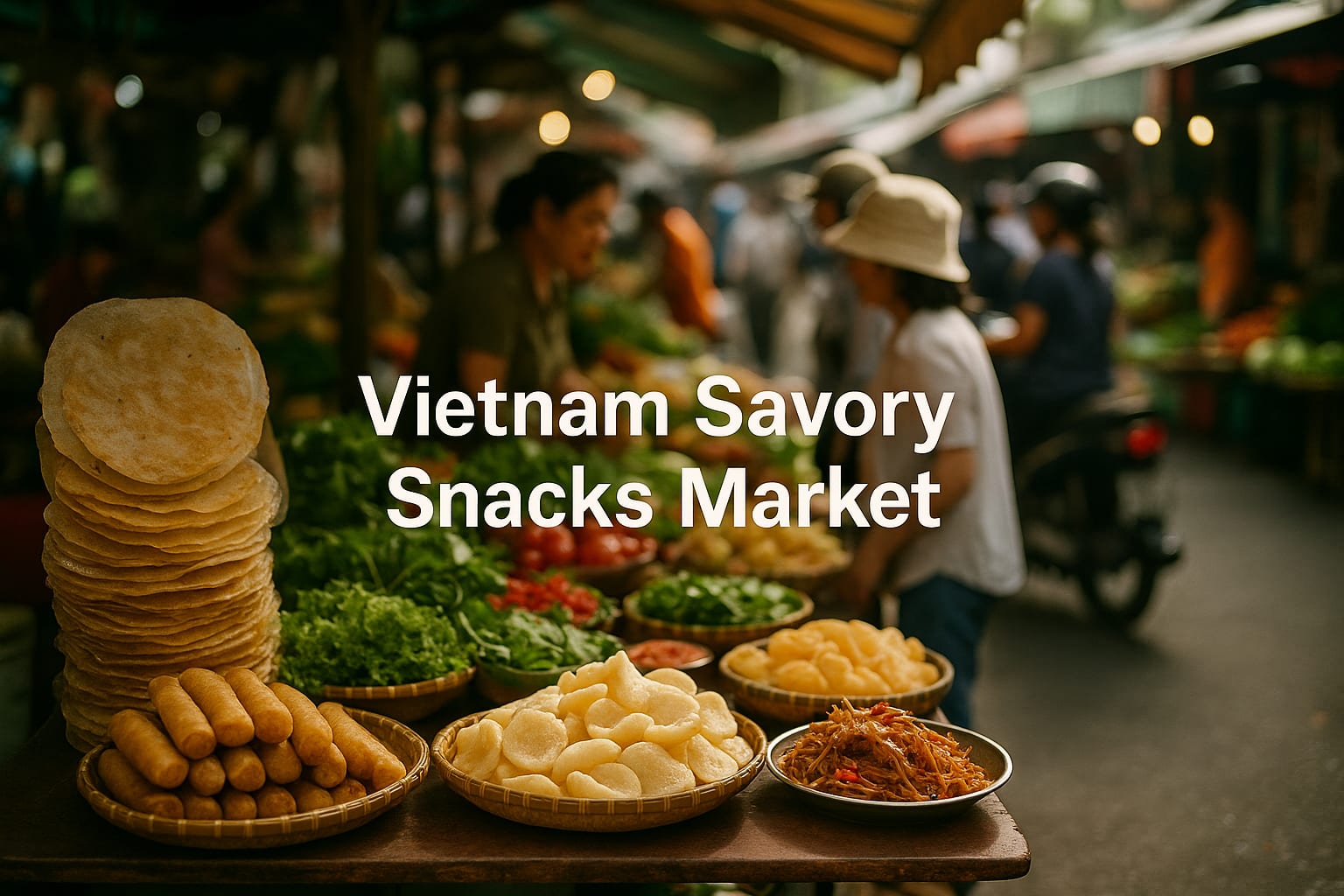
Vietnam Savory Snacks Market
The Vietnam Savory Snacks Market is valued at USD 750 million, driven by evolving consumer lifestyles favoring convenient on-the-go options, rising disposable incomes, urbanization, and growing exposure to global flavors amplified through social media and e-commerce. Ho Chi Minh City and Hanoi dominate due to large urban populations, higher consumer spending capacity, and well-established modern retail and foodservice distribution infrastructure. Vietnam’s 2024 mandatory nutritional labeling regulation requires all pre-packaged savory snacks to display energy, protein, fat, and sodium content, with full enforcement expected by January 1, 2026.
Trends in Vietnam Savory Snacks Market
The Vietnam Savory Snacks Market is being shaped by convenience-driven consumption, premiumization, health-oriented innovation, and the rapid expansion of e-commerce and modern retail distribution channels.
Potato Chips as Leading Product Type: Potato chips lead the savory snacks market, driven by strong consumer preference for familiar flavors and convenience, supported by continuous product innovation from leading international and local snack manufacturers targeting Vietnam’s urban demographics.
Extruded Snacks Gaining Traction Among Youth: Extruded snacks are gaining strong consumer appeal, particularly among younger demographics drawn to innovative shapes, textures, and bold flavor profiles that differentiate them from conventional savory snack formats available in retail.
Rising Demand for Health-Oriented Snacks: With 86% of consumers prioritizing ingredient transparency and health benefits, growing demand for nuts, seeds, and high-protein snack variants is driving functional snack innovation among Vietnam’s urban health-conscious consumer segment.
E-Commerce Enhancing Market Reach: Vietnam’s e-commerce market projected to reach USD 32 billion is significantly expanding snack brand distribution reach, enabling companies to connect with tech-savvy urban consumers and improve product accessibility beyond traditional brick-and-mortar retail formats.
Retail Consumers as Dominant End-User: Retail consumers dominate snack market demand, driven by the increasing cultural normalization of snacking among individuals and families, supported by rapid expansion of supermarkets, convenience stores, and online grocery platforms across major Vietnamese cities.
Ken Research provides comprehensive market intelligence across multiple industrial sectors, supporting data-backed business and strategic evaluations.
Competitive Landscape of Vietnam Savory Snacks Market
The Vietnam Savory Snacks Market features a dynamic mix of leading domestic food companies and global snack brands competing through product innovation, distribution expansion, and flavor diversification.
Vinamilk: Founded in 1976 in Ho Chi Minh City, Vietnam, Vinamilk is Vietnam’s largest dairy company, diversifying into snack and nutritional food categories to leverage its nationwide distribution network and strong consumer brand recognition.
Masan Consumer: Established in 1996 in Ho Chi Minh City, Vietnam, Masan Consumer is a leading Vietnamese FMCG company with a broad food and beverage portfolio spanning sauces, seasonings, and snack-adjacent convenience food products across modern and traditional retail channels.
Mondelez International: Founded in 2012 in Chicago, USA, Mondelez International is a global snacking powerhouse offering a diverse portfolio of biscuits, chips, and savory snacks across Vietnamese retail, foodservice, and modern trade channels.
PepsiCo Vietnam: Established in 1994 in Ho Chi Minh City, Vietnam, PepsiCo Vietnam is a dominant savory snacks player through its Lay’s and Doritos brands, leveraging deep local market penetration, innovative flavor development, and extensive nationwide distribution.
Kinh Do Corporation: Founded in 1993 in Ho Chi Minh City, Vietnam, Kinh Do Corporation is one of Vietnam’s most recognized food brands, offering a wide range of confectionery, bakery, and savory snack products distributed through extensive domestic retail networks.
For deeper insights into related markets, explore the India Savory Snacks Market, which provides comprehensive analysis of regional dynamics, competitive strategies, and growth opportunities across similar sectors.
Challenges in Vietnam Savory Snacks Market
Rural Distribution Infrastructure Gaps: Underdeveloped rural distribution infrastructure across Vietnam’s non-urban regions significantly limits snack product availability and timely delivery, restricting market penetration and creating substantial lost revenue opportunity for manufacturers targeting nationwide consumer reach.
Rise in Raw Material Costs: With 49.2% of food and beverage businesses planning to raise prices due to increasing raw material costs, snack manufacturers face pressure to balance production cost inflation against consumer affordability and competitive retail pricing requirements.
Nutritional Labeling Compliance Investment: The 2024 mandatory nutritional labeling regulation requires manufacturers to overhaul packaging, testing, and compliance systems before the January 2026 enforcement deadline, adding significant operational cost and administrative complexity for both domestic and imported snack brands.
Intense Competition from International Brands: Dominant global snack players including PepsiCo and Mondelez command strong brand loyalty and marketing budgets that create significant market share barriers for smaller domestic snack manufacturers seeking competitive growth in Vietnam’s urban retail landscape.
Price Sensitivity in Lower-Income Segments: A significant portion of Vietnam’s population remains price-sensitive, limiting premium and functional snack adoption and requiring manufacturers to carefully balance innovative product positioning with accessible pricing strategies to capture broader consumer demographics.
Additional market intelligence can be found in the Global Savory Snacks Market, offering valuable perspectives on industry trends, regulatory frameworks, and strategic developments shaping the broader market landscape.
Conclusion
The Vietnam Savory Snacks Market, valued at USD 750 million, is poised for strong growth driven by urbanization, rising incomes, and expanding e-commerce and modern retail channels. While rural distribution gaps and rising input costs remain key challenges, opportunities in premium functional snacks, digital retail, and health-oriented innovation offer compelling pathways for sustained long-term market development.
Interested in a deeper dive? Download the full report for a detailed market analysis and segmentation.