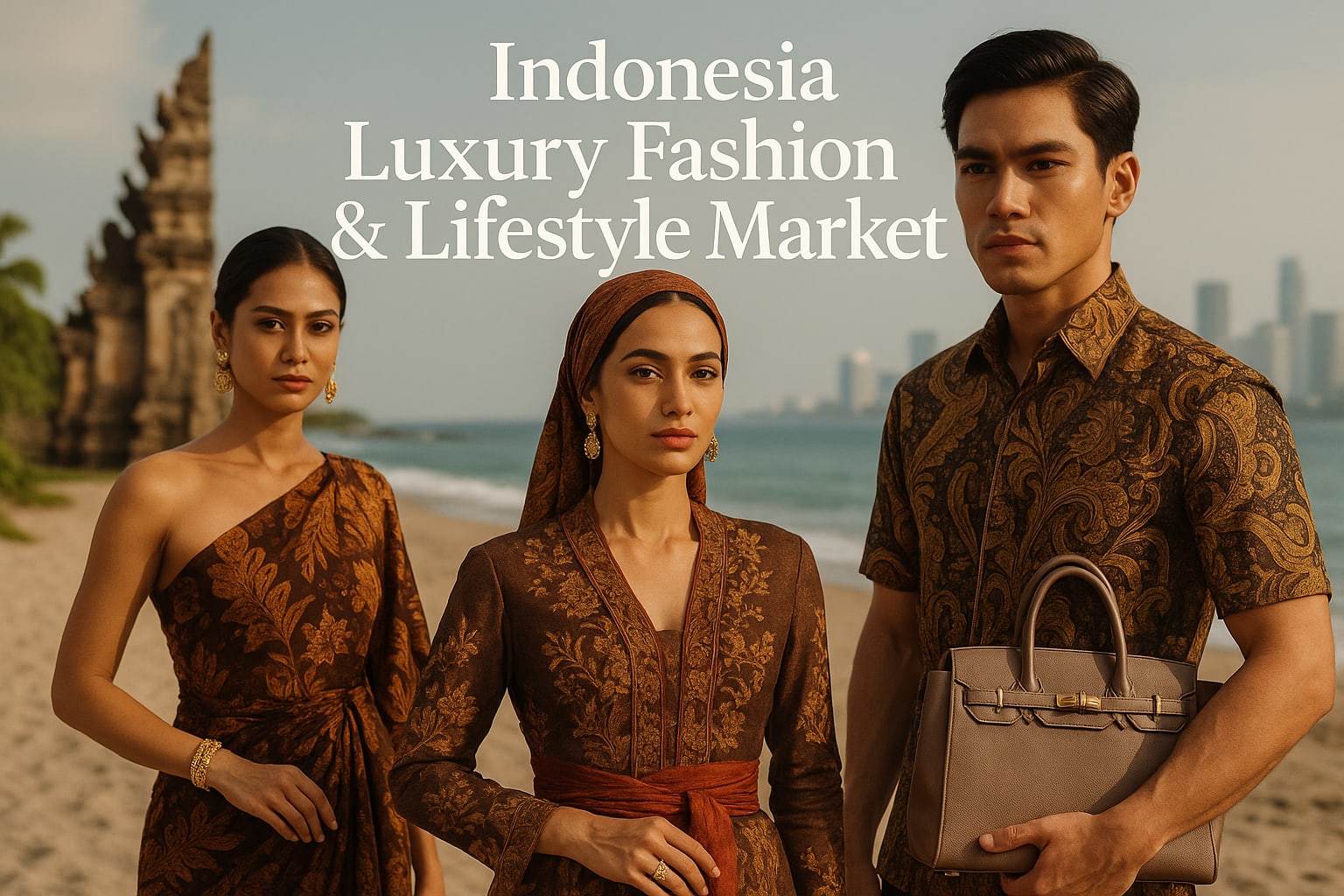
Indonesia Luxury Fashion & Lifestyle Market
The Indonesia Luxury Fashion & Lifestyle Market is valued at approximately USD 3.0 billion, driven by rising disposable incomes, a growing middle class, and increased consumer interest in luxury goods among millennials and Gen Z. Future trends include urbanization reaching 57% with over 150 million people living in urban areas, and internet penetration expected to rise to 77%, facilitating e-commerce sales projected to exceed IDR 400 trillion (approximately USD 28 billion).
Trends of Indonesia Luxury Fashion & Lifestyle Market
Rising Urbanization: Indonesia’s urban population is anticipated to reach 57%, translating to over 150 million urban residents, fueling demand for luxury fashion and lifestyle products.
E-commerce Growth: E-commerce platforms are expanding rapidly, with sales expected to surpass IDR 400 trillion (approximately USD 28 billion), supported by 77% internet penetration among the population.
Economic Volatility: The market faces challenges due to Indonesia’s economic growth rate of 5.3%, which remains sensitive to global fluctuations impacting consumer spending.
Inflation Impact: Inflation hovering around 3.5% could affect luxury goods consumption by influencing disposable income and purchasing power.
Counterfeit Market Threat: The presence of counterfeit products valued at approximately USD 4.6 billion undermines the genuine luxury segment significantly within Indonesia.
Ken Research provides comprehensive market intelligence across multiple industrial sectors, supporting data-backed business and strategic evaluations.
Competitive Landscape of Indonesia Luxury Fashion & Lifestyle Market
The Indonesia Luxury Fashion & Lifestyle Market features multiple well-established key players with rich global heritage and longstanding operational presence.
Louis Vuitton: Founded in 1854 and headquartered in Paris, France, this brand is renowned for its high-end luxury goods including handbags and accessories.
Gucci: Established in 1921 with headquarters in Florence, Italy, Gucci is famous for combining classical and contemporary fashion luxury.
Prada: With origins dating back to 1913 in Milan, Italy, Prada is a leading name in stylish, sophisticated apparel and accessories.
Chanel: Founded in 1910 and based in Paris, France, Chanel is iconic for its timeless fashion and luxury products.
Hermès: Established in 1837 with headquarters in Paris, France, Hermès is synonymous with premium leather goods and couture.
For deeper insights into related markets, explore the South Africa Luxury Fashion Lifestyle Market, which provides comprehensive analysis of regional dynamics, competitive strategies, and growth opportunities across similar sectors.
Opportunities of Indonesia Luxury Fashion & Lifestyle Market
Sustainable Fashion Demand: Approximately 70% of consumers prefer eco-friendly products, signaling substantial growth potential in sustainable luxury segments.
Rising Disposable Incomes: Economic growth in key cities is driving disposable incomes up by 10% , increasing purchasing power for luxury goods.
Digital Sales Expansion: Enhanced internet penetration and e-commerce platform improvements offer new channels to reach tech-savvy and younger consumers.
Millennial & Gen Z Influence: These demographic segments are driving a shift toward trendy and experiential luxury, prompting brands to innovate offerings.
Urban Population Growth: Increasing urbanization beyond the current 57% is expected to elevate demand for personal luxury and lifestyle products in metropolitan centers.
Additional market intelligence can be found in the Qatar Luxury Fashion Lifestyle Market, offering valuable perspectives on industry trends, regulatory frameworks, and strategic developments shaping the broader market landscape.
Conclusion
The Indonesia Luxury Fashion & Lifestyle Market is poised for substantial growth driven by rapid urbanization, expanding digital commerce, and rising consumer preference for sustainable and luxury brands. Despite economic and counterfeit challenges, opportunities abound in segmented urban markets and evolving consumer demographics supporting future expansion and innovation in the sector.
Looking for deeper insights? Download Sample Report to explore detailed segmentation and market intelligence.